Other People’s Money: Dashing Crypto Crime with Two Maxim Matveevs
In short
“Other People’s Money” is a 2025 series directed by Igor Tverdokhlebov. The camera flies, zooms in on the characters’ faces and on objects, dollies in and out to the rhythm of the showdowns between characters, and even films them from a hidden-camera angle.

28 May 2025
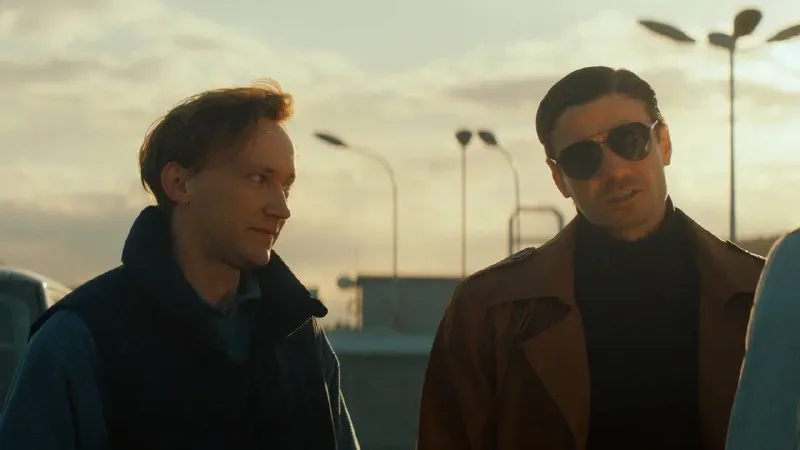
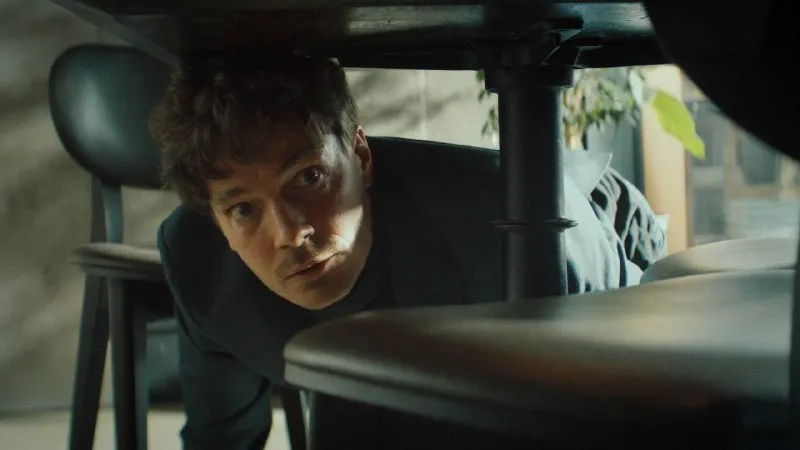
A little later, I started Other People’s Money (Chuzhie dengi), a dashing piece of crypto crime with two Maxim Matveevs (hello to Amur, Mickey 17, Vasily and other films with twins).
The first thing that impresses pleasantly is the camerawork. The camera flies, zooms in on the characters’ faces and on objects, dollies in and out to the rhythm of the showdowns between characters, and even films them from a hidden-camera angle. Such visual variety literally rivets the gaze: it has been a long time since I was drawn into a series precisely by the cinematography. This is a rare phenomenon among contemporary projects and therefore a winning decision.
Watching Matveev in two guises is also extremely interesting; it is especially pleasing that the long-playing one turned out to be not the self-assured personality but the modest version of the hero, capable of character transformation. Despite a plot that is absolutely fantastical in current realities, the very idea of making something about good old swindlers operating with the latest technology and bitcoin is really rather appealing. In short, every factor speaks for continuing to watch.
7 June 2025
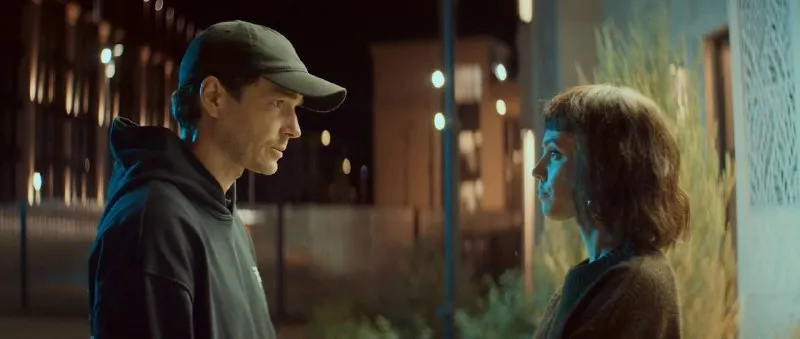
It is great that Other People’s Money not only kept its camerawork trick right up to the finale but did not let us down in the script either.
Events unfolded in such a way that the finale brings a great deal of moral satisfaction. Behind the numerous cunning schemes with crypto and cash-outs, viewers had to choose their favourite Twix bar version of Maxim Matveev, and the authors did the same for an effective resolution. An understandable attitude of hatred mixed with pity arose towards Svin (“Pig”), and, though Gosha Kutsenko’s character is utterly distinctive, you do not sympathise with him that much. Alina (Stasya Miloslavskaya), of course, is not without questions, but did nothing radically bad (and, accordingly, did not deserve it).
It is as if the series, which resembles science fiction more than reality, ended fantastically fairly. And that, of course, is a pleasant rarity for the empathetic viewer.