F1: The Plastic World Has Won After All
In short
“F1” is a 2025 film directed by Joseph Kosinski. F1, of course, masterfully takes your breath away at certain moments, but at the same time reminds you that the plastic world has won after all.

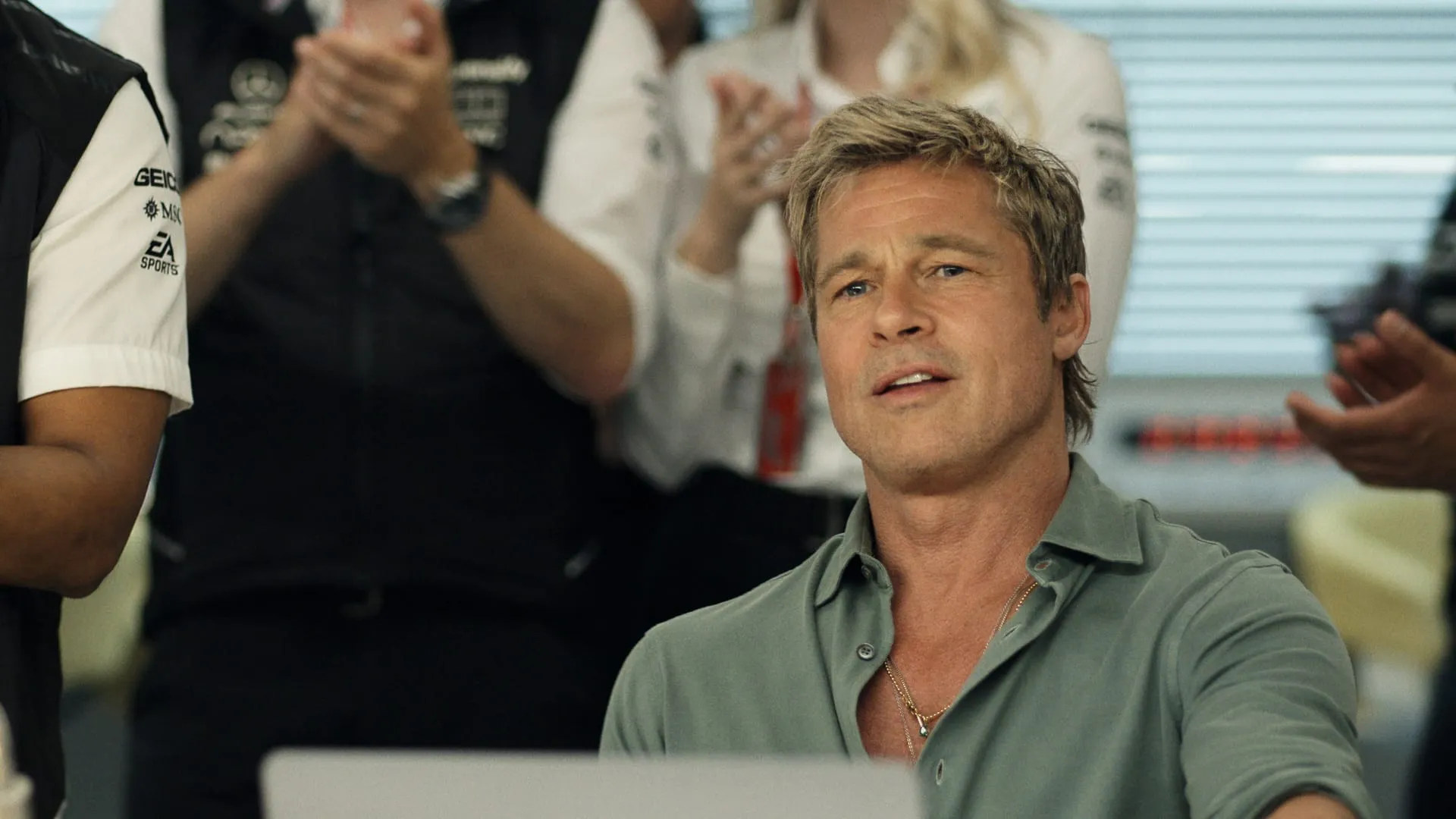
F1, of course, masterfully takes your breath away at certain moments, but at the same time reminds you that the plastic world has won after all.
The picture has a mass of merits: Brad Pitt, who has lost not a drop of conviction in the role of the cool rebel; the camerawork in the racing scenes, edited so that you want to unlearn how to blink; an inspiring story with driving dynamics. And the rules of motor racing are explained in the most native way possible, so that we think in the same terms as the characters. All this adds up to a wonderful attraction that genuinely fits the title of the main blockbuster, but there are a couple of “buts”.
At the beginning the film seems to do, in racing slang, a lap to warm up the tyres. We are introduced to the main characters, who do not particularly arouse sympathy (and by their nature simply do not need it), and the future conflict is outlined (Brad Pitt’s character versus everyone). All this warm-up time I, as a viewer, am in the passive position of an observer rather than a participant in what is happening, because there is nobody for me to latch onto through empathy: the heroes are declared as script functions, not fully fledged personalities.
The film’s sterile studio quality has made the character descriptions schematic, as if skipping the stage of emotional make-up and immediately clarifying for the viewer who is responsible for what. Sonny Hayes is a cool guy with character who will get on everyone’s nerves but will not betray anyone. The young driver who has to acquire wisdom, not just swagger. The team leader who is in crisis, but Hayes will save everyone. The gifted engineer from whose single exchange of glances with Hayes we predict a romantic line.
Perhaps it is precisely this technical precision of the schemes that work in blockbusters that became the key to the film’s success with audiences. But I would have liked to get more sincere impressions from the viewing, rather than rational observations.