The Time of the Happy: The First Episodes Convince Me Life Is Pain in Any Era
In short
“The Time of the Happy” is a 2026 series directed by Ilya Silaev. In general, contrary to my expectations of some life-affirming intonation, watching it so far only convinces me that life is pain in any era.

26 February 2026
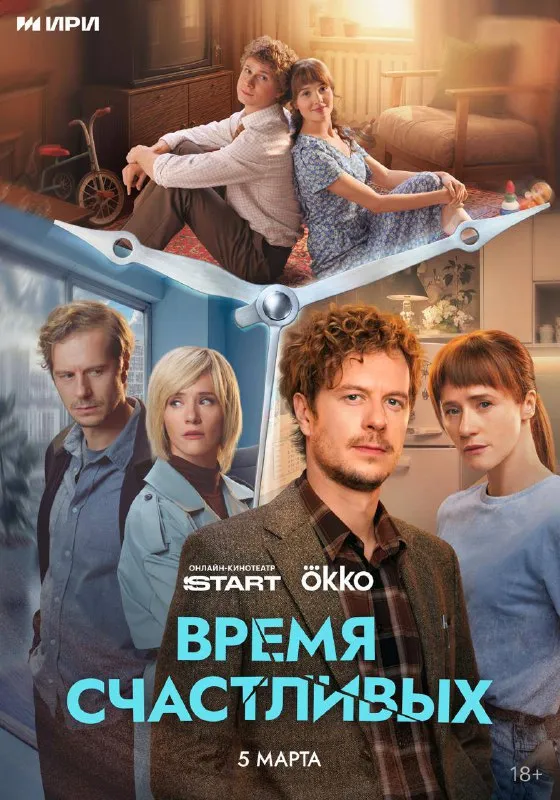
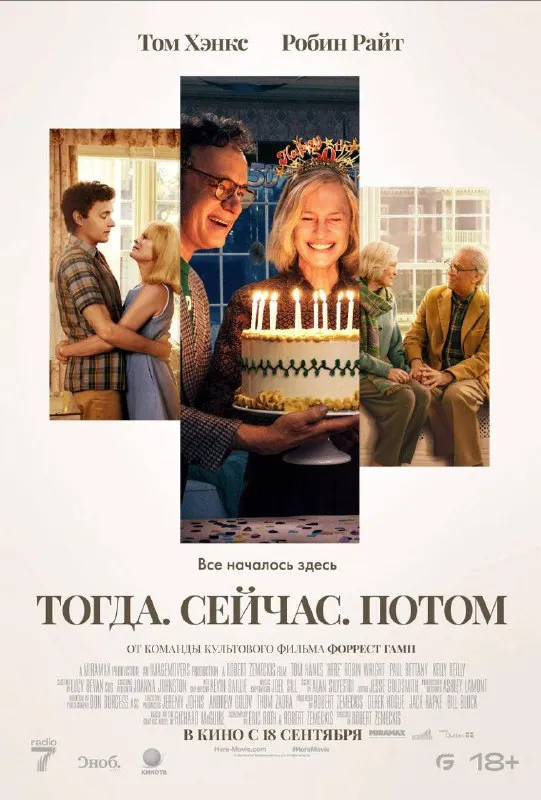
I am watching the upcoming series The Time of the Happy (Vremya Schastlivykh) with interest (and I cannot help comparing its poster with the recent Togda. Seychas. Potom («Тогда. Сейчас. Потом», “Then. Now. Later”))
We are in for a drama about the life of one family, Marina and Ivan Schastlivykh (the surname means “the happy ones”). Before the viewer’s eyes the characters will live through three different eras, 1985, 1999 and 2012, and will be tested not only by time but also by the difficulties of family life. All these moments are already announced in the teaser, where you can also see the two generations of actors who will play the characters.
It seems to me that for a long time we have been missing a project that would show the end of the 20th century not from the gangster side, but from the point of view of people who were simply trying to live through such a historical moment. In part this was there in Mir! Druzhba! Zhvachka! (“Peace! Friendship! Bubblegum!”); it will be interesting to see how it unfolds this time. We will be watching from 5 March.
6 March 2026
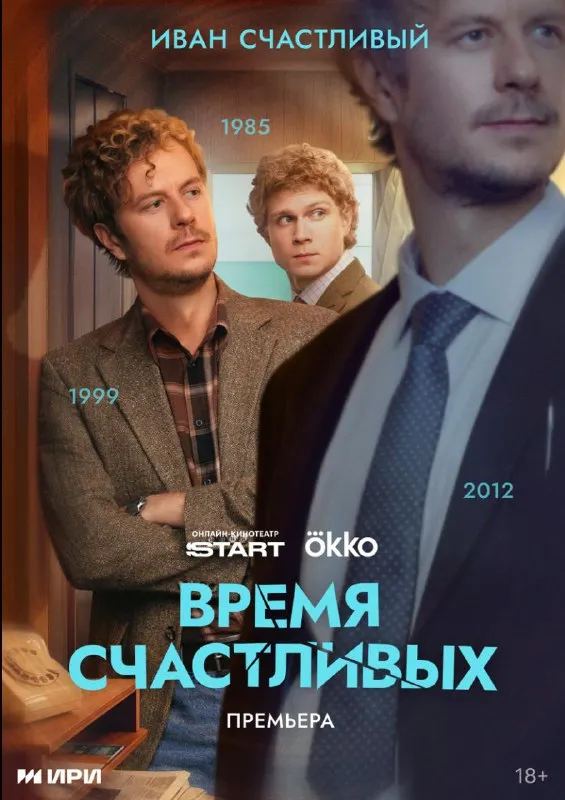
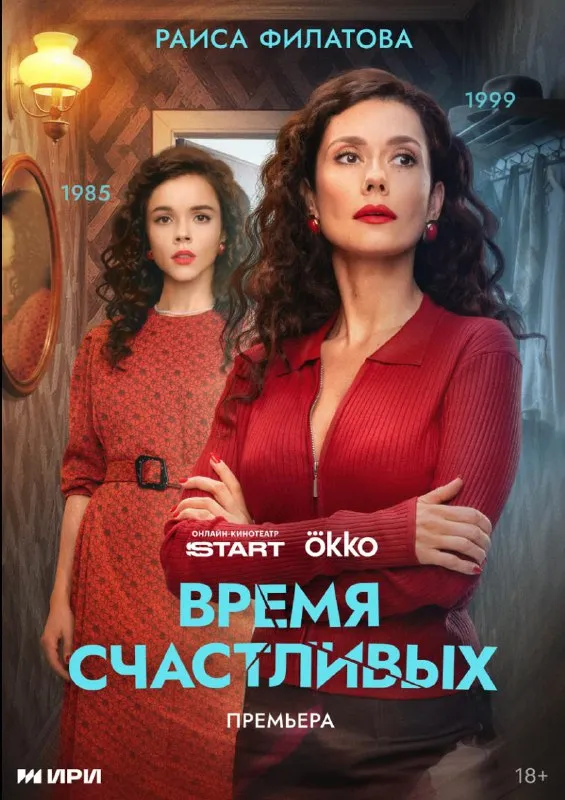
I did not think The Time of the Happy would start like a roller coaster called “33 Misfortunes” (the Russian title of A Series of Unfortunate Events). But something else surprised me most of all.
From the very first episode I felt the deepest contempt for the main character, Ivan, who is immediately established as an uncontrollable cheater and a pathological liar. Despite this, apparently out of contrariness, I watched all 3 released episodes of the project in one go: it turned into a little hate-binge. I suppose I was hoping to see as soon as possible how life would punish this character, but so far it feels as if the only ones punished are the women and children around him.
In general, contrary to my expectations of some life-affirming intonation, watching it so far only convinces me that life is pain in any era. It is funny how the phrase “now is a time of opportunity” recurs like a refrain from year to year (the series covers 1985, 1999 and 2012). You get the feeling that so far the characters only use the opportunity to lose or ruin something, but what is that if not a subtle hint at marginal realism?)
I want to give special respect to the casting decision for the young and mature versions of Raisa. Sonya Arzhanykh and Viktoria Zabolotnaya are simply the Milly Alcock and Emma D’Arcy of Russian series: an undeniable and unquestionable resemblance, and a big stroke of luck for the believability of the heroine.