Squid Game: Types Instead of Names, and a Decent but Imperfect Finale
In short
“Squid Game” is a 2021 series directed by Hwang Dong-hyuk. The secret is this: each of the actors is a very clear-cut type turned up to the maximum, recognisable without a name from episode to episode.

18 January 2025
The first season of Squid Game was largely an attraction: both at the plot level, where deadly games among the poor entertained the elite, and at the level of the viewer’s perception: the series’ vivid symbol-memes lodged in the memory for a long time (while its twisty finale, in my case at least, was practically forgotten)
The second season is not rich in such entertainments, so it plays differently. We are introduced into the action very unhurriedly, without being reminded, meanwhile, of some important details forgotten over several years. It is not vitally necessary, but personally I would have preferred not just to assume in general terms that Seong Gi-hun intends to stop the games, but to recall in detail (since the games themselves have been pushed back all the way to the third episode) how things ended there.
And, most importantly, the second season has lost the lightness of a reality show while increasing its moral analysis of what is happening. Now we do not simply watch from the outside a hero who has got into a fix, but are given his optics from the start: after all, we too have already “played these games” when we watched the first season. Hence an even greater temptation to transfer the events of the series onto our own realities and even fewer opportunities for escapism while watching. And the finale, cut off essentially for the formal division of seasons, embarrasses rather than intrigues. In short, it is all rather specific and an acquired taste, and how many have acquired it will be shown this year by the figures for the third season (which will no longer have the advance credit of such gigantic expectations).
29 June 2025
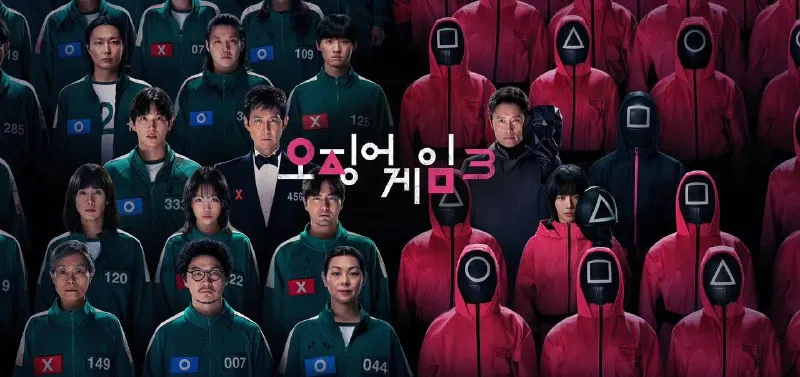
Ask yourself how many characters from any season of Squid Game you remember by name? Well, Seong Gi-hun. Well, the Front Man. If you remember anyone else, you are surely a member of the series’ fan club.
Most likely you do not, and yet everything is clear without the names and the viewing goes on. This is the manifestation of an interesting industry case.
The trick is that the casting of the actors for the roles in Squid Game is special. We do not get to know each of them in detail; we have neither the time nor the opportunity to remember this crowd by name, or even by number (which in itself is a very winning device for an international project, but again, apart from 456, whose number do we remember by heart?) The secret is this: each of the actors is a very clear-cut type turned up to the maximum, recognisable without a name from episode to episode.
It is precisely this typification that is one of the keys to the project being talked about for 4 years. We remember the characters as “that vile junkie rapper”, “the kind old lady”, “the mummy’s-boy weakling” or “the greedy old man”, and that is enough for us to understand one another and to remember the events of the previous season far better. The credit for this effect goes to the actors’ types and the work on how they are expressed. It is great that genuine know-how can be found in such a mass-market product.
29 June 2025
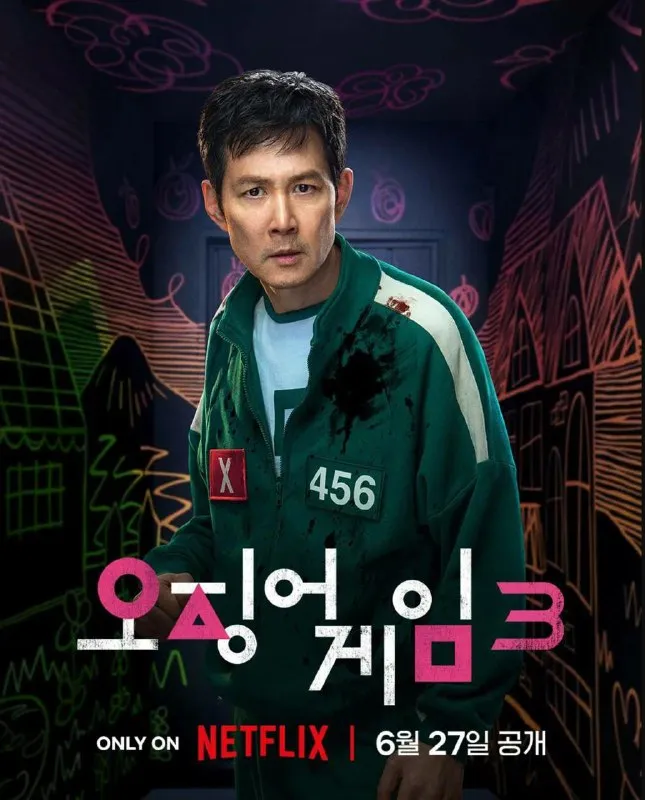
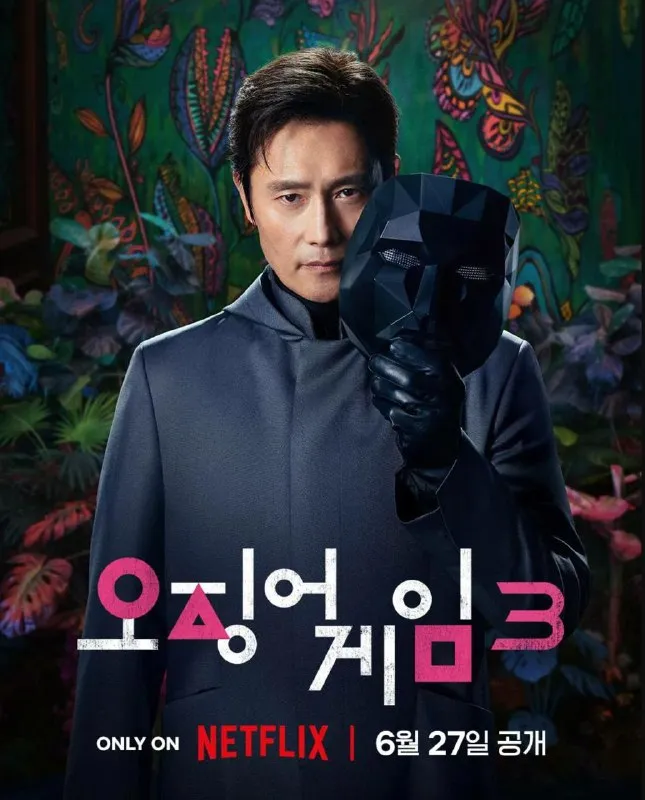
On the whole, the third season of Squid Game is a decent, if not perfect, conclusion to the main part of the franchise (not counting the future American Game, of course).
The final opposition of 8 adult men and a baby girl seems a great device, hinting to the viewer at whom, in the authors’ opinion, the future belongs to. What bothers me in this whole nobly built construction is that neither the organisers of the games (the same kind of adult men) nor the main consumers of the games, the so-called “VIPs”, have gone anywhere. And the two girls (222’s daughter and Seong Gi-hun’s daughter), having come into such money, may sooner or later become “VIPs” themselves. In a word, some kind of deceptive catharsis took place.
But that does not bother me as much as the secondary storyline with the collective search for the island. I have probably not felt like this since reading The Master and Margarita at school, when from one chapter of Woland’s Moscow escapades to the next you suffer through the text about Yeshua. Only in Bulgakov all this is justified, significant and equally valuable (and, growing a little beyond a schoolchild’s optics, you understand that). Whereas here this storyline appeared, completely unproductive in terms of any influence on the resolution. It is made almost solely to turn one game that fits perfectly into one season into two seasons, through a side plot. I sincerely did not appreciate such a doubling of the plot and hope that in future seasons (they are inevitable) they will manage to focus on exploring human nature in extreme circumstances.