A History of Russian Film Festivals: From the 1935 Soviet Film Festival to Kinotavr
In short
And this is where we arrive at the second-oldest film festival: the Russian one! Or more precisely, the Soviet Film Festival in Moscow.

15 October 2024
All last week I was following Mayak, the Russian film festival in Gelendzhik, and along the way I became interested in the history of the film festival movement in Russia. So please welcome a small (but the first on this channel) special project about Russian film festivals! And I have even written about the cinema where it all began once before)
Over the next 2 weeks, in a series of 5 posts, I will tell you about the life and death of Russian film festivals from the beginning of the 20th century to the present day, arrange them in order across the calendar year and even try to match them with their Western counterparts by the profile of their programmes.
The first part is coming today!
15 October 2024
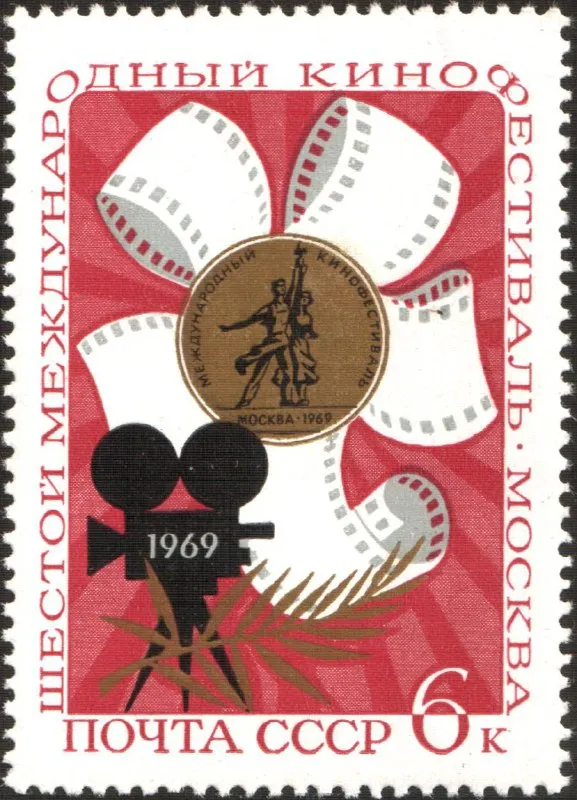
1️⃣ Part ⅕. The second-oldest
Where did film festivals come from in the first place? It all began with European film clubs in the 1920s; then came curated screenings with a programme lasting several days, and then, with the arrival of sound film in 1927, the process sped up many times over. So in 1932 the world’s first film festival took place: Venice. It appeared as part of the Venice Biennale, an international art exhibition held since 1893 (the same age as cinema!). There was no competition yet, but at the second festival in 1934 it appeared: the main award was not yet the Golden Lion but the Mussolini Cup (yes, cinema was the most important of the arts for the most varied regimes).
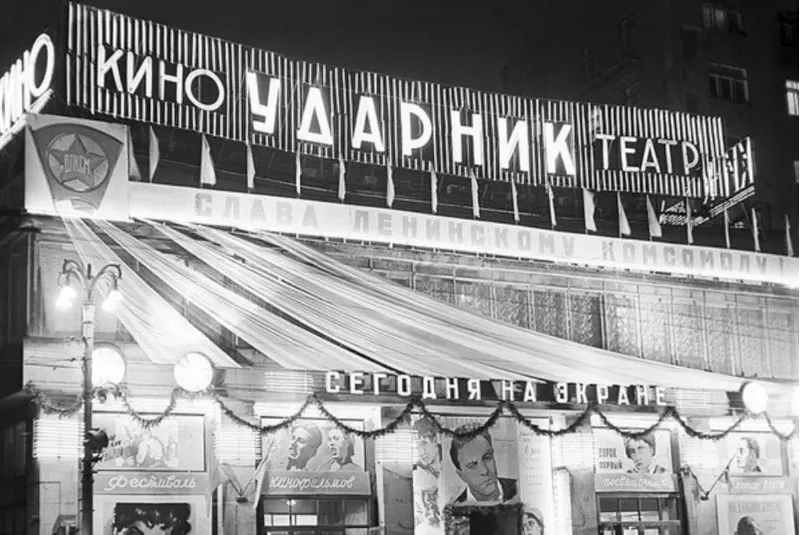
And this is where we arrive at the second-oldest film festival: the Russian one! Or more precisely, the Soviet Film Festival in Moscow. 1935, the Udarnik cinema, an international competition, the opening film Chapaev. On the jury: Sergei Eisenstein, Vsevolod Pudovkin, Alexander Dovzhenko. The preconditions for its emergence: political hostility to the regime in Italy at the time and the 15th anniversary of the Soviet film industry, which was celebrated everywhere in January of that same year.
Unfortunately, neither of the first two film festivals flourished for long. Venice went underground for the whole of the Second World War and returned to its flagship status only in 1946. And the Soviet Film Festival in Moscow was never again held in its previous form. Its successor was, and remains today, the Moscow International Film Festival (MIFF). From 1959 it was held every two years, and from 1999 it became annual (who was behind that, by the way, I will cover in one of the next posts). And until 2022 it was the only Russian A-category film festival (that is, accredited by the International Federation of Film Producers Associations on a par with Cannes, Venice, Berlin and a dozen or so other major festivals around the world).
In short, with film festivals everything seems to happen not thanks to, but despite. But when has that ever bothered us?)
In the next part: who made MIFF annual, what is strange about its programme, which festival split off from the Moscow International, and much more.
23 October 2024
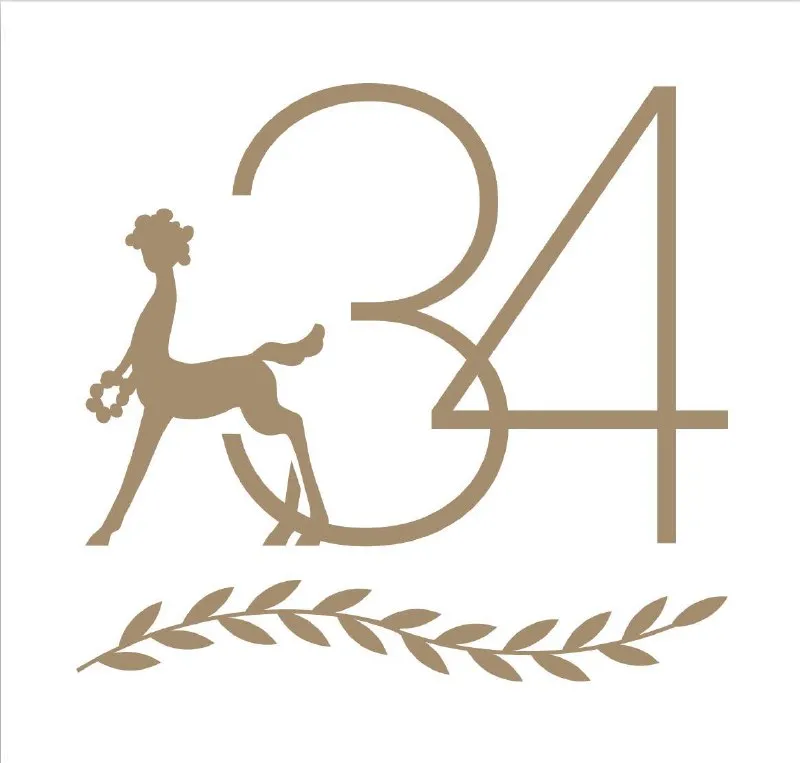
2️⃣ A History of Russian Film Festivals. Part ⅖. Changes
So, in the previous part we arrived at the moment when MIFF became a regular Soviet film festival held every 2 years. It was an astonishing time, when Federico Fellini, Sophia Loren and Francis Ford Coppola came to the USSR just as they did to Venice and Cannes, and in 1987 the jury president was Robert De Niro. In short, MIFF grew by every measure to truly Hollywood proportions.
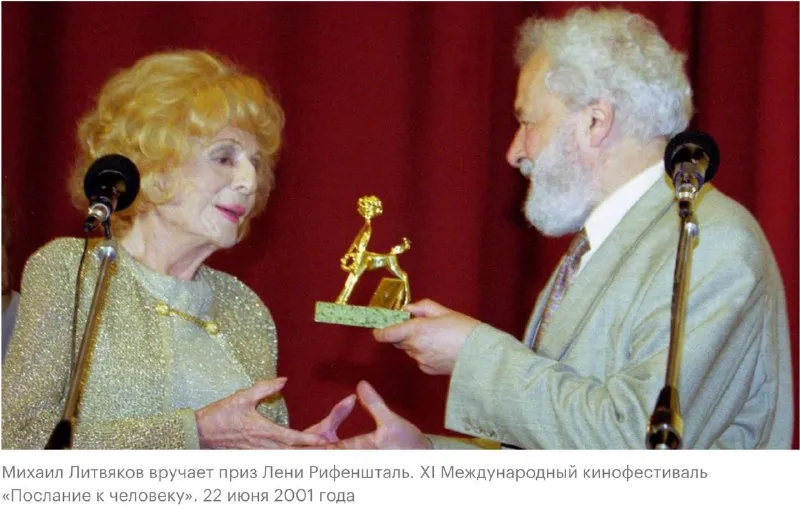
And so in 1988 MIFF grew so large that its documentary programme split off, taking shape as a separate (also international!) festival, at that time only of documentary film, Poslanie k cheloveku (“Message to Man”). At the suggestion of the documentary filmmaker Mikhail Litvyakov, the showcase was moved to Leningrad, held there for the first time in 1989, and its symbol (in the first photo) was named the “Kentavryonok”, the little centaur (yes, this image was hovering over the Russian festival movement even before Kinotavr appeared!). Message to Man is still actively held, now including experimental and fiction film and animation too. Kinopoisk has a wonderful article with a more detailed history of the showcase and unique photos (I was especially struck by the shot of Leni Riefenstahl receiving an award in 2001)
Meanwhile MIFF began to stall: the collapse of the country, crisis and social upheaval do nobody any good. In 1998 it could not be held at all because of financial problems. In 1999 the post of president of MIFF was taken by Nikita Mikhalkov (something tells me no such post existed before), and since then the festival has been held annually. Let me remind you of the context: in 1999 Mikhalkov is a triumphant figure with Burnt by the Sun already behind him (the Oscar for Best Foreign Language Film and the Grand Prix of the 47th Cannes Film Festival) and the internationally shot The Barber of Siberia. So there is no need to be surprised at the magical disappearance of the financial problems, all the more so since various researchers describe the Mikhalkov of that period as a rather effective manager (I relied, in particular, on the book Istoriya rossiyskogo blokbastera, “A History of the Russian Blockbuster”).
In short, MIFF survived hard times for the second time in its history, but on the horizon other major Russian film festivals had already appeared: Kinotavr and Okno v Evropu (“Window to Europe”). Where they came from and how they differed, in the next part!
30 October 2024
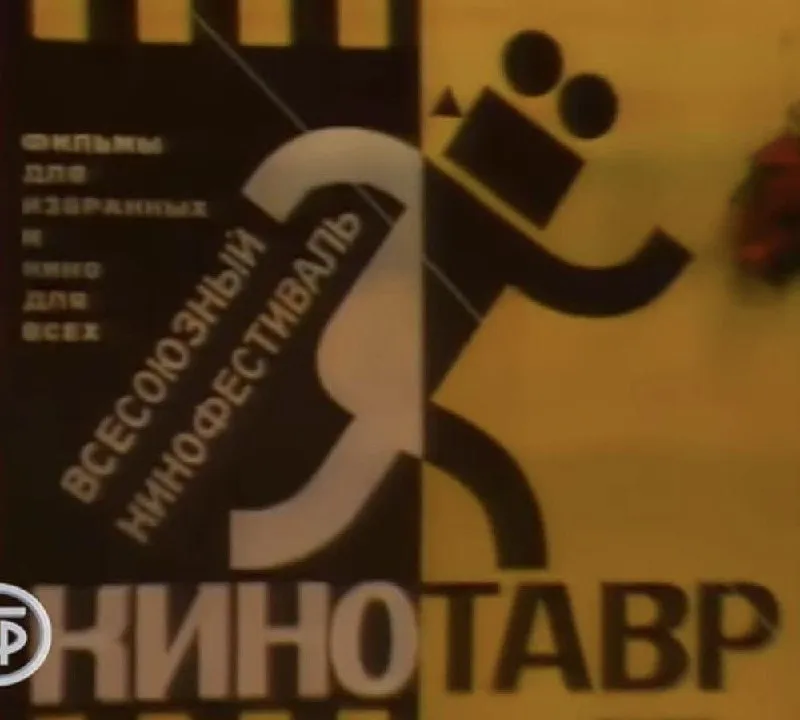
3️⃣ A History of Russian Film Festivals. Part ⅗. Why Kinotavr Is Called That
So, MIFF survived, and Kinotavr and Window to Europe appeared. Let us look at them in more detail.
Kinotavr did not appear at once. Its prototype, the Festival of Unsold Films, took place in Podolsk in 1989 on the initiative of the businessman (if one may call him that; the man has an interesting biography) Mark Rudinstein. The thing is, in the raging perestroika the amount of auteur cinema rose sharply, but cinemas did not buy it, because the new market economy needed crowd-pleasers rather than art films. So a multitude of films arose that had no chance of reaching cinema screens and audiences. And then Rudinstein stepped in and gave these films and their authors a chance. The authors’ jubilation motivated the businessman so much that he decided to stage a bigger film festival by the sea, in Sochi, of course. Only the unwanted auteur films were not fit for such a scale.
The festival held by the sea in 1991 acquired a programme of two parts: one for audiences (“Cinema for Everyone”) and one for critics (“Cinema for the Chosen”). They say that because of this someone joked that it was turning into “some kind of centaur” (kentavr). And the film critic Alyona Bokshitskaya corrected: “Kinotavr!”, giving the festival its name. That is how it would exist for the next 30 years, becoming the symbol of a whole film era. By the way, the post of “festival president” (and we remember who holds it at MIFF) appeared precisely at Kinotavr, and it was held by Oleg Ivanovich Yankovsky. It sounds honorary, but it had a thoroughly practical purpose: state sponsorship needed someone whom officials would be happy to receive in their offices and not send away empty-handed. For Kinotavr’s first ten years this scheme with Yankovsky worked, but then something stalled, and the question arose of selling the festival.
In its early days Kinotavr had an international programme (as, in principle, did all the festivals mentioned above). And in 1993 the festival Window to Europe was launched in Vyborg: the oldest national film festival in Russia, focused specifically on Russian cinema. A festival with a surprisingly calm history, it outlived Kinotavr and exists to this day.
In the next part: the rebirth and death of Kinotavr, and lots of film festivals with one-word names