Blockbuster History in the New Russia: Film Nonfiction That Reads Like a Thriller
In short
“Blockbuster History in the New Russia: Movies, Memory, and Patriotism” is a 2012 book by Stephen M. Norris. I have read only a little so far, but I already have the distinct feeling that this is the most important thing published in Russian about Russian cinema lately

14 April 2024
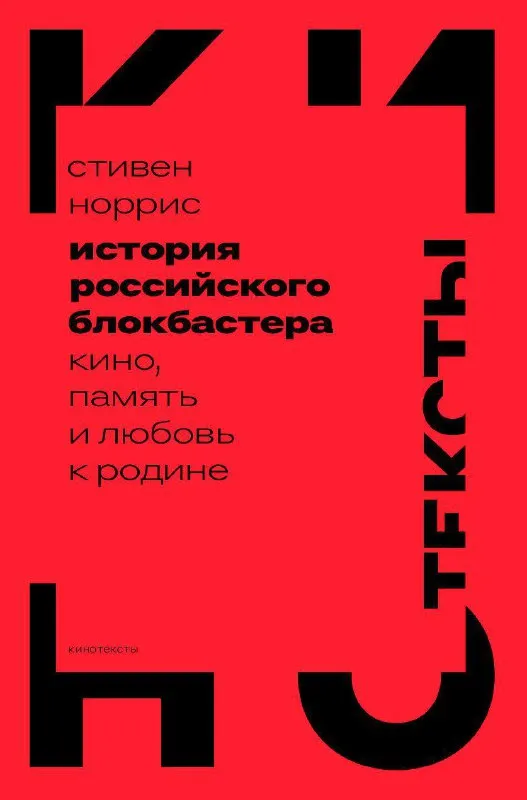
if you feel like reading nonfiction about Russian cinema and understanding how we ended up where we are, but in a way that feels like a thriller, a horror film and a historical epic all at once, open the book Blockbuster History in the New Russia («История российского блокбастера» in Russian) right now (for example, on Bookmate)
don’t be fooled by the title — it is very cunning and pretends to be an ordinary niche and possibly tedious study by an American Slavist, while in fact it hides a rich and lively text with answers to almost every question about Russia and Russians (no wonder that ever since Lenin we have had “cinema is the most important of the arts”; Norris’s book proves it a century later)
I have read only a little so far, but I already have the distinct feeling that this is the most important thing published in Russian about Russian cinema lately — besides, an outside view of a cultural phenomenon always has its advantages over analysis from within
barely tore myself away from the book to write this post, so, as you can imagine, off I go to read on
20 July 2024
Remember I recommended a book? I finished it and recommended it once again) The most interesting things I took away:
I finally understood what Nikita Mikhalkov’s thing is (in the good sense, as far as that is possible)
In the USSR art was more important than life, that is, it was a way of escaping an unpleasant reality. In modern capitalism life (that is, the material) turned out to be more important than art. Hence we have what we have
For the rise of Russian cinema in general (and of the blockbuster in particular) we are indebted to Alexei Balabanov and his Brother duology (I knew it, knew it, knew it)