Olga Kromer’s Kazhdy atom: A Hidden Treasure, but for a Strange Epilogue

A book break
Two books in parallel reading were not enough for me, and I started a third, and it was the one I finished fastest.
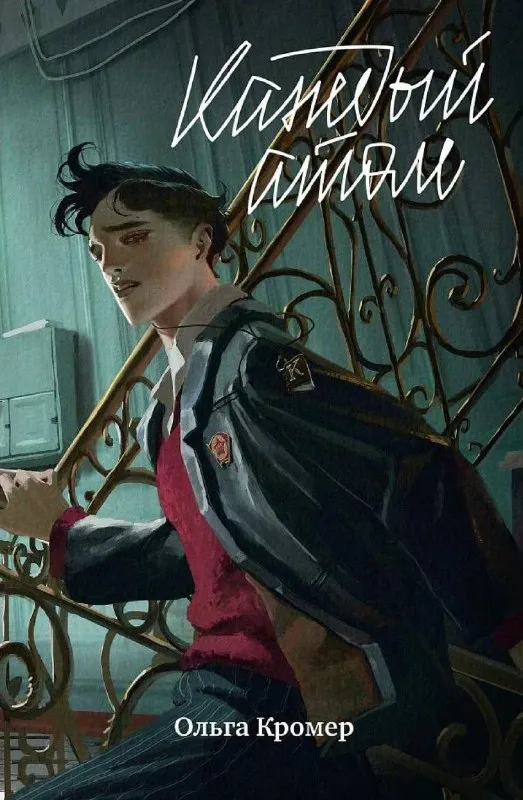
I am talking about Olga Kromer’s novel Kazhdy atom («Каждый атом», “Every Atom”): a plot packaged as young adult about a 16-year-old Soviet lad in 1937 (I suspect the hero’s further adventures can roughly be guessed). In the broad sense the book turns into a detailed description of the process of replacing an idealised worldview with a realistic one. Despite the coming-of-age framework, it is written very vividly, interestingly regardless of age, and even (something I always especially value) cinematically, which is why it genuinely draws you in. The small things of everyday life, of the heroes’ daily existence, of the city and its transport are described in detail.
Appearing in a cameo, for example, is Pavel Filonov, the painter who entered the history of art as the theorist of analytical art, so historical accuracy is all in order there. It would be interesting if he were played by, say, Yura Borisov.
I would even call the novel a hidden treasure, were it not for one “but”. An epilogue that completely crosses out the heroes’ entire journey. In my view, what the author chose to end the book with turns all its fresh merits into an incredible truism. This is perhaps the rare case where I would sooner prefer an open ending (and I cannot stand open endings) to what is offered as the conclusion of the plot. So I highly recommend this book, but advise being prepared for a strange epilogue.