Minotaur: When Poisoned Air Becomes the Protagonist
In short
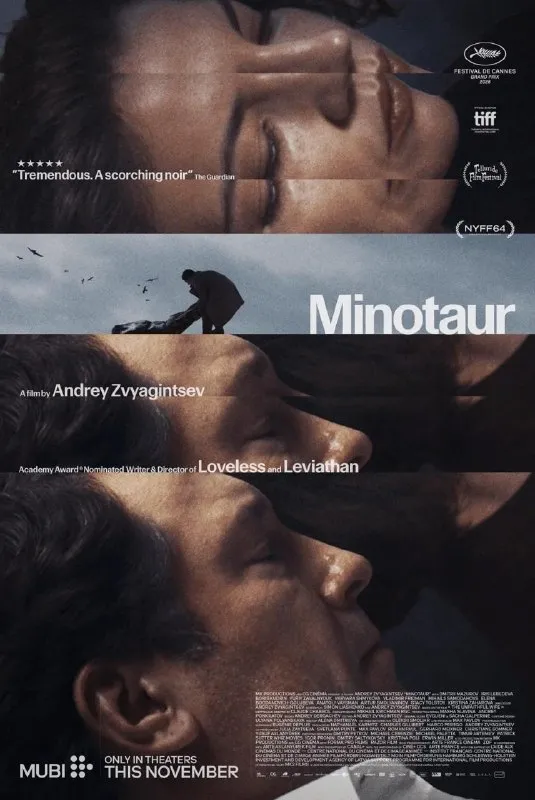
“Minotaur” is a 2026 film directed by Andrey Zvyagintsev. If the phrase “poisoned air” ever needs a visualisation, Minotaur can safely be cited as the perfect example. In September 2022, Gleb, a businessman in a provincial city, is ordered to pick fourteen of his own employees for mobilisation.

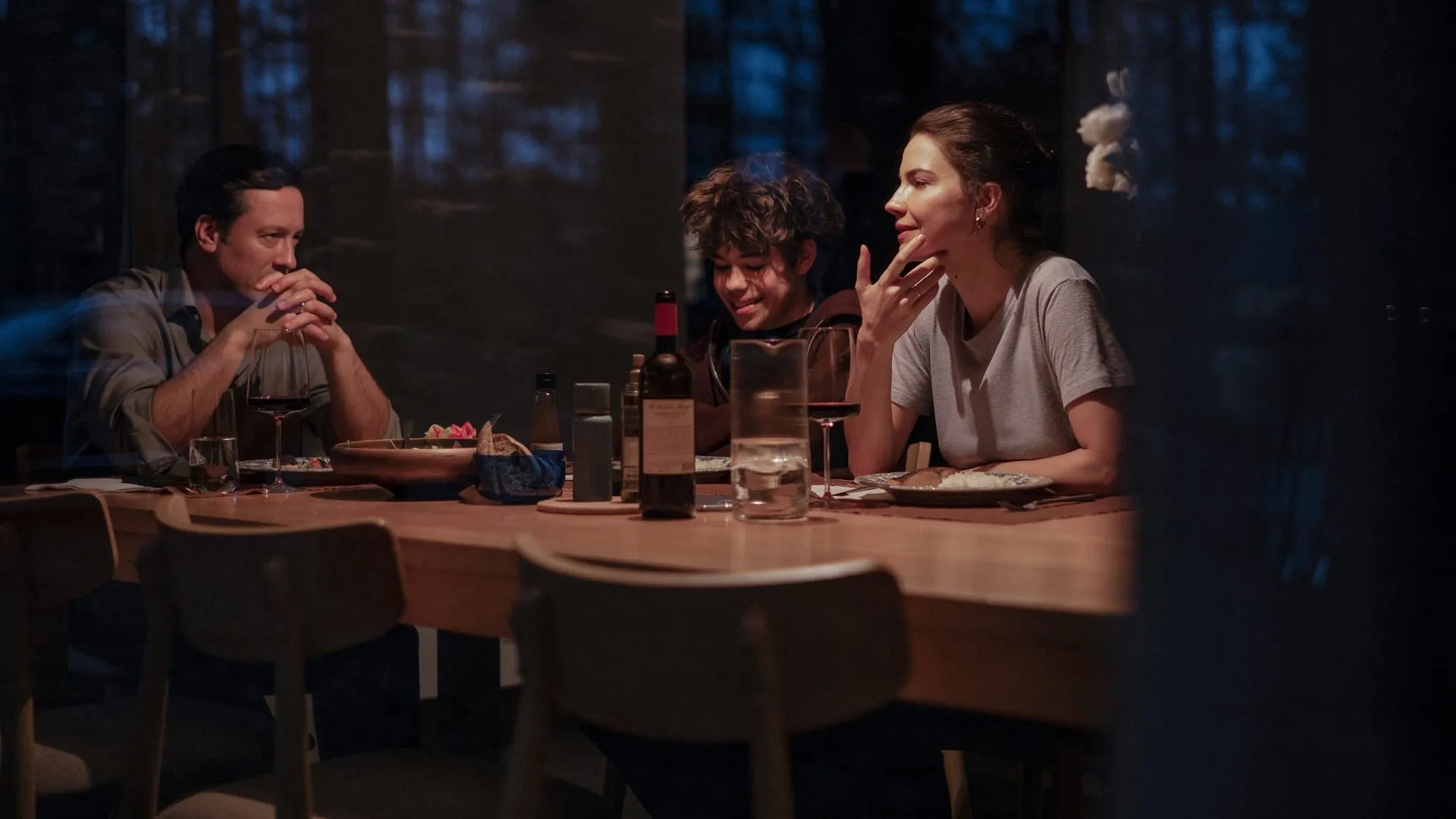
If the phrase “poisoned air” ever needs a visualisation, Minotaur can safely be cited as the perfect example.
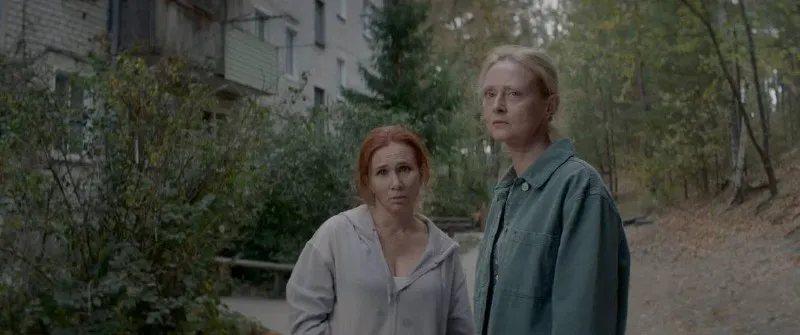
In September 2022, Gleb (Dmitriy Mazurov), a businessman in a provincial city, finds himself confounded not only by family trouble (his wife Galina is cheating on him) but also by an order from above: to pick fourteen of his own employees for mobilisation. Making decisions nobody would ever want to make (there is, incidentally, a wonderful scene for this, in which Gleb’s view of the situation is set against those of his businessman friends), the hero barely notices how his own self is changing. Walking with Gleb down this not-so-pleasant but very believable path through the back alleys of a readiness to compromise is, at the very least, gripping; at most, it leaves you stunned.
As soon as the first news about Minotaur appeared, I unashamedly read the whole plot on Wikipedia, because I knew that what mattered here was not what exactly would happen, but how. I turned out to be right. This is not just big festival cinema; it is practically a cast of a particular moment in our shared life, the everyday signs of a universal and irreversible transformation sealed inside the frame. And, of course, to sketch the character of what I saw, I want to reach for associations with the classics 👇
First, the film has a scene whose cruelty is comparable, perhaps, only to Korean cinema. The closest match here is Bong Joon-ho’s Parasite, where for most of the running time the viewer is weighed down by the bleakest social irony, and then, at the climax, real brutality breaks out on the physical plane. For two hours we watch how the characters came to live like this, and for three minutes we actually see exactly what they have come to.
Second, the urban environment that enters the frame matters a great deal. It so happens that I defended my degree thesis on precisely this subject, “The Representation of the Urban Environment in European Cinema: The Case of Auteur Film of the 1950s–1960s”. It is even funny that back then it hardly occurred to me to look for urbanist subtexts in contemporary cinema, whereas now I would certainly include Minotaur in that study as a separate case. For the films of the New Wave it was fundamentally important to achieve documentary realism on screen, which is why the action was taken out onto the streets. Its attention to the details of urban space gives Minotaur exactly that: a realism that plunges you into a kind of paralysing déjà vu, down to the typeface on the posters and the shades of the passers-by’s clothes. It is worth adding that in the films of the European New Wave (let us count Italian neorealism and the Soviet Thaw in here too) buildings destroyed in the Second World War flickered through the frame as the backdrop to the mental state of many of the characters. What flickers in the background of the irreversible inner rearrangement of Minotaur’s characters we have seen with our own eyes, so from the screen it hits twice as hard.
I would like to watch Minotaur again with the ability to pause, rewind and examine the shots: there is more than enough detail to study, from the actors’ subtle facial expressions and the moments when Evgueni Galperine’s singular score emerges and fades away, to the tiniest signs in the background. I hope the chance will come in the near future.