How to Make a Killing: The Question of an Unpunished Crime Falls on the Viewer’s Conscience

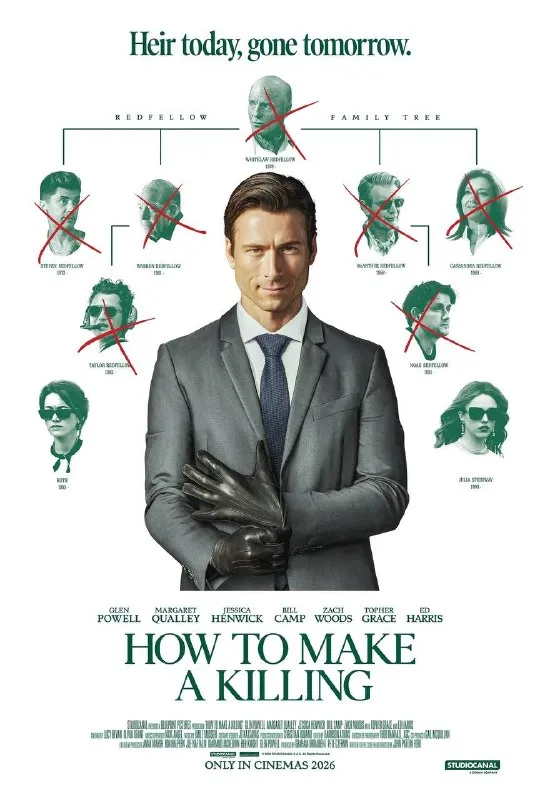
I do not see that many reviews of the film How to Make a Killing with Glen Powell, and yet the film is actually very interesting.
Becket (Powell), an offspring of the noble Redfellow family who has been short-changed since childhood, grows up and decides to take what is his. For the whole fortune to pass to him, he has to become the eldest of the heirs, which is to say the only one. The main question: how to deal with the 7 members of the family who stand in the way of the fortune? And this is where the film’s main moral dilemma kicks in.
At first the picture reminded me of Scott Pilgrim vs. the World: there it was 7 evil exes, here it is 7 evil heirs, and all of them have to be defeated. Then, when I no longer felt like laughing, it started to resemble No Other Choice: once again we face the question of the price of one’s own well-being in a world full of competitors.
But How to Make a Killing grips your attention precisely through its philosophical side. The question of whether an unpunished crime is admissible falls squarely on the conscience of every viewer and leaves the ending open to individual interpretation.